
pop culture locations from movies, music, tv & more...
death valley national park
from star wars, return of the jedi posted in movies by pete_nice
The impressive short film Grounded by Kevin Margo was also filmed at Death Valley. Here's hoping the guy gets a sci-fi picture deal soon...
 view full location details...
death valley national park
from star wars, return of the jedi posted in movies by pete_nice
Although most of it was filmed overseas, some key shots of Star Wars were filmed in Death Valley. Not surprisingly, the filming locations were intended to represent Luke's home planet, Tatooine. When Return of the Jedi was made, the crew returned to the famous national park. A self-guided walking tour (with pictures!) can be found at this site.
A more complete list of the many films shot at Death Valley can be found on the nps.gov website.
 view full location details...
shake rag (or shakerag)
from elvis presley posted in music by elvis_crabs
Elvis and his family lived near this predominantly African-American neighborhood in Tupelo. The Mississippi Blues Commission put a sign here in 2003 that reads as follows:
"Shake Rag, located east of the old M&O (later GM&O) railway tracks and extending northward from Main Street, was one of several historic African American communities in Tupelo. By the 1920s blues and jazz flowed freely from performers at Shake Rag restaurants, cafes, and house parties, and later from jukeboxes, while the sounds of gospel music filled the churches. The neighborhood was leveled and its residents relocated during an urban renewal project initiated in the late 1960s."
 view full location details...
cerro tololo inter-american observatory
from dark energy posted in technology by elvis_crabs
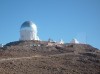
Located high in the mountains of the Atacama Desert of northern Chile (one of the most arid regions in the world), the Cerro Tololo Inter-American Observatory is an array of telescopes and scientific instruments that was founded in 1963 by Chileans and Americans.
Most recently, a phone box-sized Dark Energy Camera (or DECam) has been mounted on the 4m Victor M. Blanco telescope. The purpose of the 570-million-pixel camera is to scan some 300 million galaxies in the coming five years for evidence of dark energy.
The camera is comprised of 62 separate CCDs, the same kind of detector in consumer cameras. By doing some fancy stuff with a computer model and measuring red-shifting of an expanding galaxy paired with echoes of the Big Bang, the DECam should help to isolate and quantify dark energy. Simple as that...
 view full location details...
antietam national battlefield
from photography, photojournalism posted in history by pete_nice
On Sept 17, 1862, the bloodiest battle in American history occurred. On that day, 23,000 soldiers were killed, wounded or missing after twelve hours of savage combat at the Battle of Antietam. The battle ended the Confederate Army of Northern Virginia's first invasion into the North, and it led to Abraham Lincoln's issuance of the preliminary Emancipation Proclamation.
Named after Antitam Creek (and also called the Battle of Sharpsburg, especially in the South), the battle was also the first recorded instance of war photography. Scottish-born Alexander Gardner created a number of images of body-strewn battlefields, leaders and soldiers in tents, and layouts of important locations from the battle. In essence, it was a founding moment of photojournalism.
Garnder worked for the studio of New York portrait photographer Matthew Brady, who claimed sole credit for the photos in subsequent show. When Brady showcased the photos in New York, it caused lines around the block to see them. The Times said, “If he has not brought bodies and laid them in our dooryards and along the streets, he has done something very like it.”
Gardner formed his own photography studio in 1863, and continued to document the war. On some occasions, he was known to have hired assistants use blood red paint to enhance injuries and to move bodies to more dramatic locations for photos. Maybe he should be considered the first Photoshop-er as well.
 view full location details...