
pop culture locations from movies, music, tv & more...
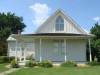
american gothic house
from american gothic, grant wood posted in art and design by chewing_the_scenery
The house is also known as the Dibble House after Charles Dibble who built it in 1881. It's an example of the Carpenter Gothic architectural style, and it was listed on the National Register of Historic Places in 1974.
 view full location details...
american gothic house
from american gothic, grant wood posted in art and design by chewing_the_scenery
This house in Eldon, Iowa was Grant Wood's inspiration for the backdrop of his iconic painting American Gothic. The models for the farmer and his daughter were Wood's dentist and sister. The painting is currently in the collection of the Art Institute of Chicago.
 view full location details...
the carter mansion
from charlton heston posted in movies by ratsnamgod
Charlton Heston's boyhood home.
Heston, or John Charles Carter at the time, lived in this area from 1923 - 1933. He would return for a year after serving in World War II and occasionally visit until 1979.
 view full location details...
marina city
from wilco posted in music by ratsnamgod
The corn cob buildings featured on the cover of Yankee Hotel Foxtrot are the towers of Marina City in Chicago. Marina City is a mixed residential/commercial location. 2010 census data reported 929 residents. Businesses include the House of Blues, Bin36, a bowling alley and a bank.
The album's title is derived from The Conet Project, which is also sampled on the track "Poor Places".
Hear Phonetic Alphabet NATO, disc 1, track 4
 view full location details...
291 gallery
from alfred stieglitz posted in art and design by prof_improbable
On November 24, 1905, the photographer Alfred Stieglitz opened a photography gallery originally known as the "Little Galleries of the Photo-Secession."
One of the first permanent photo-galleries in New York City, it closed its doors in 1908, reopening later that year as simply "291." Stieglitz organized some of the first American showings by artists such as Rodin and Matisse. From this location, he published his legendary photo journal Camera Work, and twelve issues of 291. In June 1917, Stieglitz closed down the 291.
 view full location details...